Physical Address
304 North Cardinal St.
Dorchester Center, MA 02124
Physical Address
304 North Cardinal St.
Dorchester Center, MA 02124


Getting an Amazon seller account suspended can feel like someone just pulled the plug on your business.
One minute, you’re checking orders, managing inventory, and thinking about your next product. The next, you’re staring at a suspension notice and wondering, “What on earth am I supposed to do now?”
If you need an Amazon appeal letter, the pressure can be even worse. You know you need to respond, but you’re not sure what Amazon wants to see, what evidence to provide, or how to explain what went wrong without making the situation worse.
If that’s you right now, take a breath. You’re not the first seller this has happened to, and you won’t be the last.
Amazon suspends thousands of accounts every single month, and most of those sellers didn’t do anything close to what got flagged. The system is blunt. It doesn’t ask questions before it swings the axe; it just swings.
So, your next step is to go looking for help. You type “amazon appeal letter” into Google, click over to Fiverr, and… whoa. Different gigs everywhere.
With hundreds of freelancers all claiming to be the best at writing Amazon appeal letters, all with slightly different titles, all promising fast reinstatement.
It’s a lot. Trying to figure out who’s legit and who’s just good at writing a flashy profile can feel like its own full-time job, on top of the stress you’re already carrying.
I’ve got good news for you: as you read this, you don’t need to understand Amazon’s entire policy manual to hire the right person. You just need to know three simple things: what to look for, what to ask, and what to hand over.
Stick with me, because by the end of this article you’ll have a dead-simple cheat sheet for finding a Fiverr expert who can actually get your account back, without you wasting weeks (or your last dollar) figuring it out the hard way.
Let’s break it down.
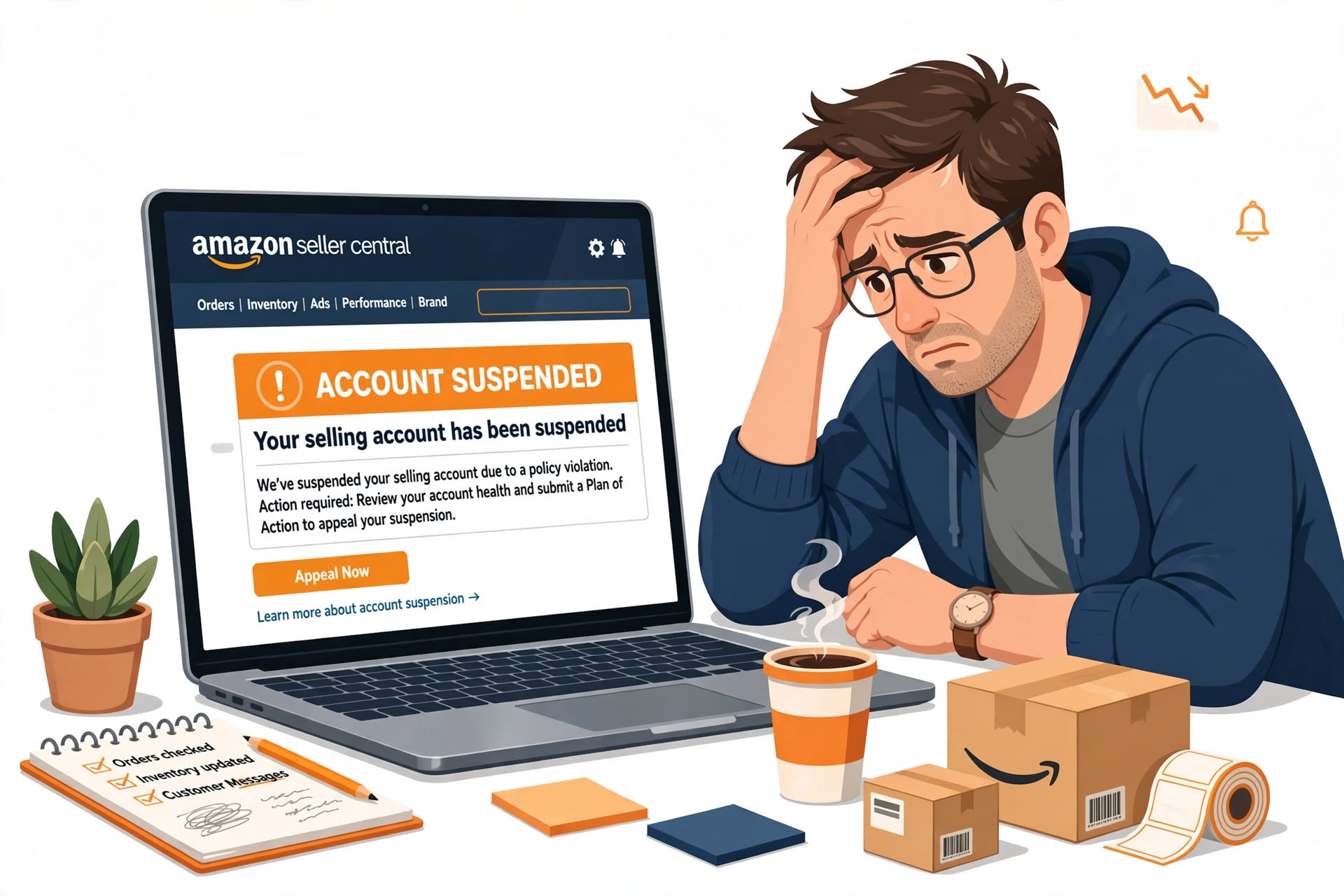
Amazon doesn’t mess around with any seller or buyer on the platform. When they suspend you, it’s usually because their automated bots flagged something that breaks their strict, ever-changing rules.
A generic, copy-pasted response won’t cut it either. They want specifics. But wait until you see the hidden side of it: Amazon’s system actually wants you to appeal, but only if you speak their exact language.
Amazon needs to understand what happened, why it happened, what you’ve already fixed, and what you’ll do to prevent it from happening again.
That’s why copying a random Amazon suspension appeal letter from Google promising to “do better” next time can be risky.
Your situation is unique.
Maybe Amazon received an authenticity complaint about one of your products. Perhaps your account was flagged for a policy violation.
You could be dealing with an intellectual-property complaint, listing problem, or account-health issue.
Each situation calls for a different response.
The source material for this guide specifically stresses that a generic appeal isn’t enough and that sellers need to address the actual reason for the suspension.
Disclosure: Some of the links in this article are affiliate links. This means I may earn a small commission if you click a link and make a purchase or sign up for a service, at no extra cost to you.
Amazon typically suspends accounts for a few common reasons. You might get suspended for a policy violation, like having a product listing that doesn’t follow their rules.
They can also suspend you for performance issues, like getting too many bad reviews. Another reason is account health problems, like high order defect rates.
And here’s where things get even more interesting. There are two main levels of suspension on Amazon: ASIN-level and account-level.
ASIN-level suspension is when a specific product is taken down. Account-level suspension is when you can’t sell at all. Account-level is much more serious and needs a more detailed Amazon appeal letter.
A free template can look attractive when you’re stressed. It truly can.
After all, you find a polished letter somewhere online, maybe free, replace a few words, add your seller name, and think, “Done.”
Not so fast, because this is the part that’s often overlooked.
Amazon’s team reviewing appeals has seen countless templates, and they’re trained to spot them instantly. When they see a copy-paste job, they won’t accept your appeal.
Just to let you know, an Amazon appeal letter isn’t supposed to sound impressive. It needs to address your specific problem.
A template can’t know:
This is where many DIY appeals fall short.
Imagine telling Amazon:
“We sincerely apologize and promise this won’t happen again.”
That sounds polite. But it doesn’t explain much.
A stronger response would explain the actual root cause, the corrective action taken, and the preventive measures introduced to stop the same problem from happening again.
Here’s a truth you’ve probably never considered. Your appeal is really a test. They want to see that you understand your business and that you’ve figured out exactly what went wrong and how to fix it.
Why this matters for you: Your account represents revenue, inventory, customer relationships, and sometimes an entire business. Guesswork isn’t worth the risk.
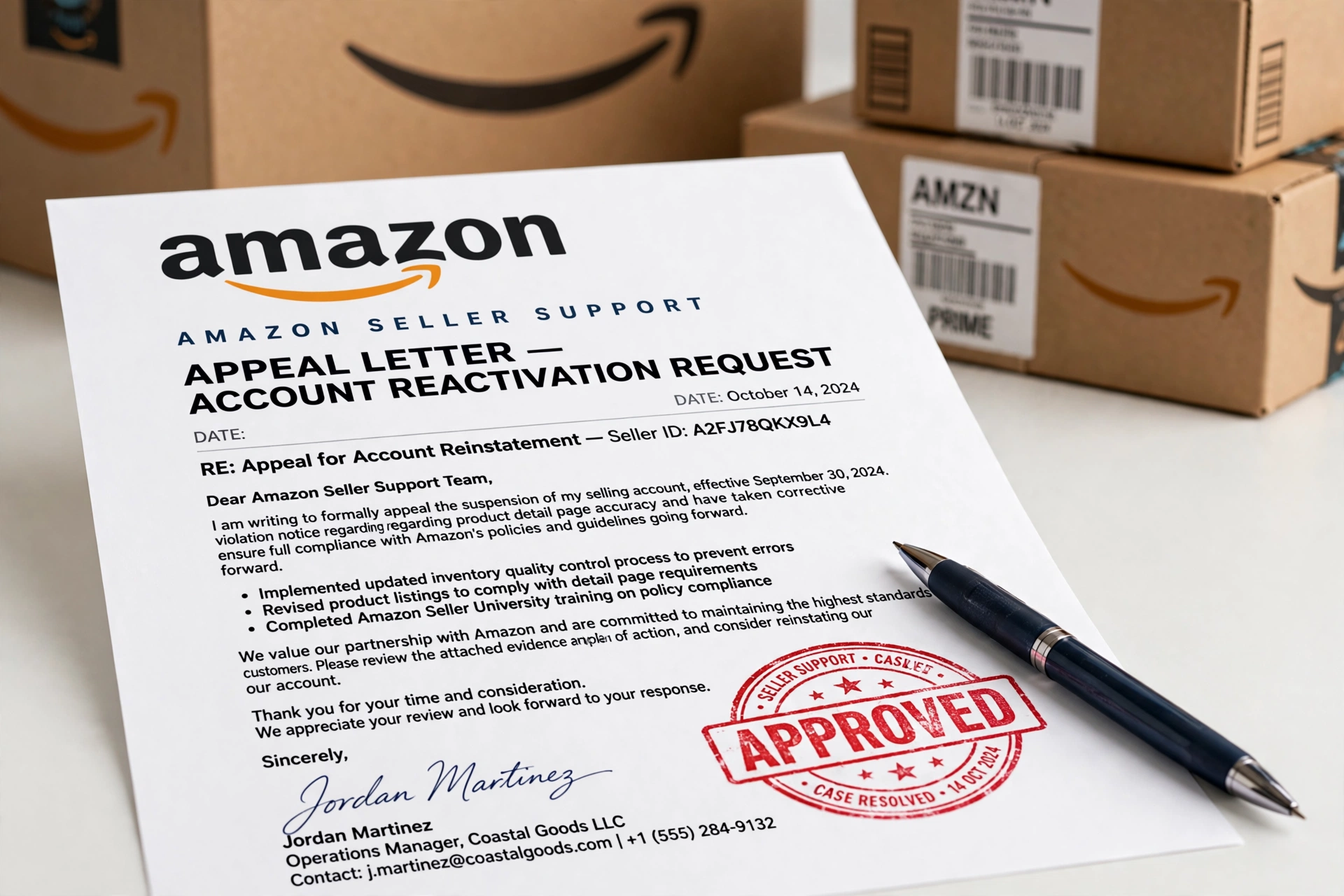
An Amazon appeal letter is a written response to an Amazon enforcement action in which you explain the issue and present your plan to correct it.
Depending on the situation, sellers may refer to this as an Amazon seller account appeal, suspension appeal, deactivation appeal, or Plan of Action.
You may need an appeal when Amazon has suspended or restricted your selling privileges or removed a listing because of a suspected policy problem.
Common situations include:
The key point is simple: don’t write an appeal out of desperation or just for the sake of writing one.
First, understand the complaint.
Then build your response around it.
You need an Amazon appeal letter whenever Amazon suspends or deactivates your account. It’s the only way to start the conversation about getting your selling privileges back.
The Plan of Action is the most important part of your appeal. Think of it as your promise to Amazon that you understand the problem and you’re taking it seriously.
It’s a detailed plan that explains what you’ll do differently moving forward.
Amazon’s team wants to see that you take responsibility for what happened. If you try to blame someone else or use vague language, they will probably reject your appeal.
A good Plan of Action has three essential parts:
This distinction trips up a lot of sellers.
Suppose a customer complains that a product isn’t authentic.
Saying “We removed the product from our inventory” may describe a corrective action.
But it doesn’t necessarily explain why the problem happened in the first place.
Maybe your supplier wasn’t properly verified. Maybe your purchasing process didn’t require enough documentation. Maybe employees weren’t checking invoices correctly.
That’s the root cause.
A good appeal connects the dots instead of throwing a pile of promises at Amazon.
Writing your first appeal yourself isn’t automatically a bad idea.
If you understand the issue and can explain it clearly, in a language the Amazon team understands, you may be able to prepare a strong response.
The problem starts when sellers submit multiple weak appeals without understanding why the previous ones failed.
You Can Also Read: Fiverr Amazon Listing Optimization: Carrie vs Luke, Who’s Best?
A rejected appeal doesn’t necessarily mean your business is finished.

But it does mean you need to stop and reassess.
Read Amazon’s response carefully.
Ask:
If you’re struggling to answer those questions, that’s a good point to consider professional help.
Why this matters for you: Every wasted attempt costs you time while your inventory and revenue stay stuck.
To write a successful Amazon appeal letter, you must get to the facts and root of the problem. Without sounding emotional. I know it’s completely understandable to be angry or frustrated at this point.
For instance, don’t just say “I sold a product that was a counterfeit.”
Instead, explain how the counterfeit product got into your inventory in the first place. Did you buy it from an unverified supplier?
That said, be aware that your appeal isn’t the place for a long story about how much the suspension has hurt your business.
Keep the focus on solving the problem.
A useful structure is:
Your appeal should be specific enough that Amazon can see you’ve actually investigated the problem.
For example, if your issue involves product authenticity, you may need to organize relevant invoices, supplier information, product records, or other evidence.
If you’re dealing with an intellectual-property complaint, your supporting information may be different.
The important thing is to match your evidence to the problem.
Don’t send a giant folder of unrelated documents just because you have them.
A good Amazon appeal letter should tell a clear story:
Problem → Root Cause → Correction → Prevention → Evidence
That’s much stronger than:
Problem → Apology → “Please reinstate me.”
By now you can probably see why so many sellers outsource this.
Writing a good Amazon suspension appeal letter isn’t really a writing skill; it’s closer to translating Amazon’s internal logic into a document their reviewers instantly recognize as credible.
Hence, if you’ve never handled an Amazon suspension before, the terminology alone can make the process feel like you’re reading another language.
That’s a specific, learnable skill, and there are people on Fiverr who’ve built entire careers around it.
That’s where hiring an experienced Amazon appeal letter Fiverr expert can make sense.
Instead of spending hours trying to figure out how to structure your POA, you can give a specialist the facts of your case and ask them to help turn those facts into a professional response.
But there’s a catch.
When you log into Fiverr, don’t hire the first person who says, “I can get your account reinstated fast.”
Nobody should guarantee an Amazon reinstatement.
A freelancer can help you prepare a better response, but the final decision belongs to Amazon.
You can also hire one on Fiverr because a good Amazon Plan of Action writer has usually seen hundreds of suspension types and knows which angle works for which one.
That kind of pattern recognition is hard to replicate on your own, especially when you’re stressed and staring at your first-ever suspension notice.
An expert should have deep knowledge of Amazon’s policies. They should also have a proven track record of getting accounts reinstated.
A strong specialist should also ask questions about your specific case. Thus, look for someone who has successfully handled cases similar to yours.
If someone immediately sends you a generic questionnaire and promises reinstatement without reviewing the suspension notice, that’s a warning sign.
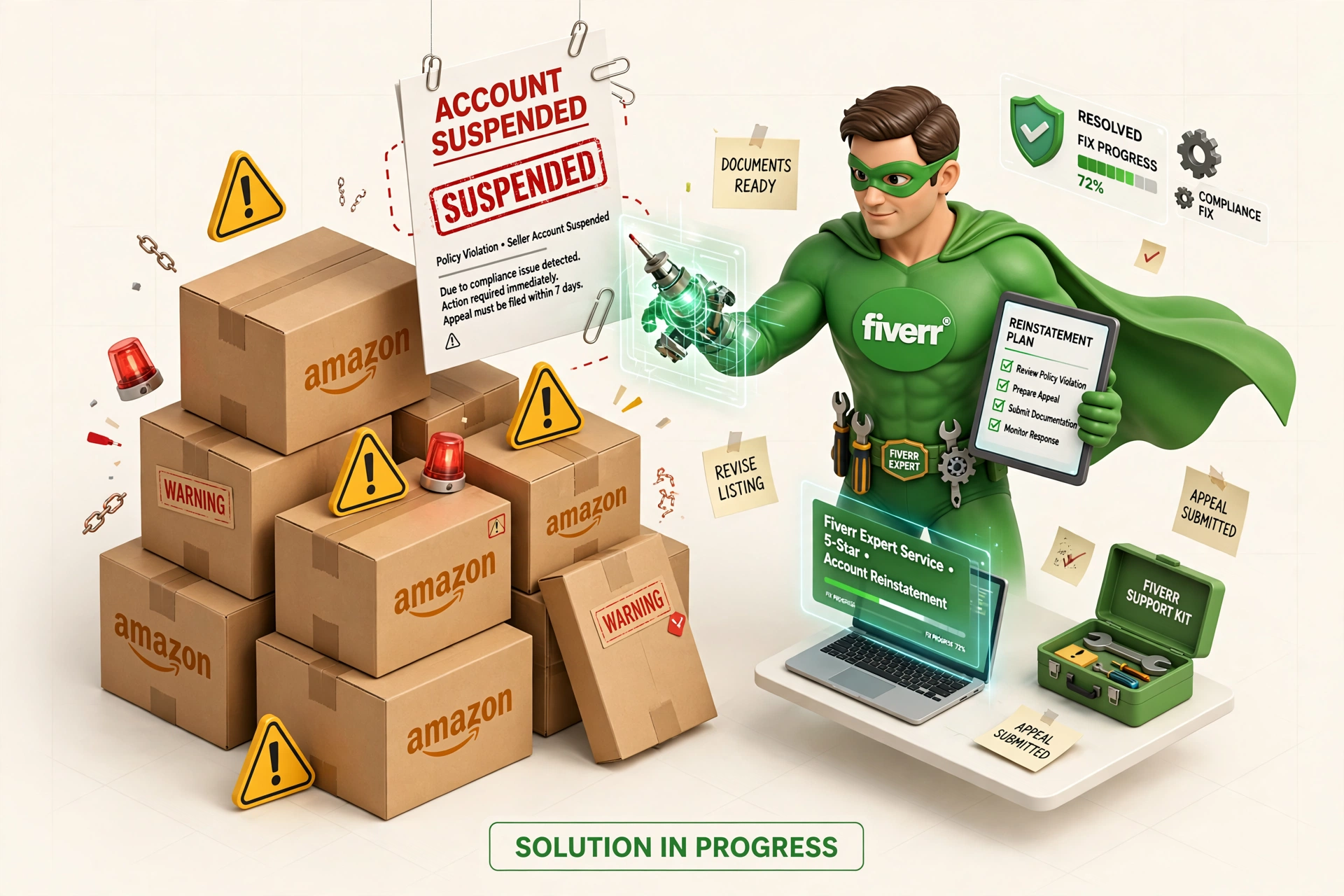
Remember that it’s your business that’s at stake here. So, don’t fall into the temptation of hiring the first person you see.
Take a little time to read a seller’s reviews and check out their profile. That’s not all. Look for positive reviews from sellers who had the same problem as you.
Aside from that, look for comments that mention the seller’s communication, understanding of Amazon policies, quality of the POA, attention to detail, and ability to work with complicated cases.
Next, check the seller’s portfolio where available.
Then look at the actual service description.
You want someone offering a service that matches your problem rather than a person who writes every type of business document under the sun.
Here’s a trick that saves everyone time: before you message anyone, write a short brief. In it, include your suspension type, the exact wording from Amazon’s notice, whether this is your first or second appeal, and any documents you already have ready.
A tight brief like this gets you faster, more accurate quotes, and it filters out freelancers who aren’t actually equipped for your specific case.
Never give a freelancer your Amazon password.
Your goal is to give them the facts they need to write or improve the appeal, not unrestricted access to your account.
Avoid being emotional or angry in your appeal. Amazon wants to see professional business owners. Stick to the facts, be polite, and focus on your plan to fix the problem.
If you have already tried to submit an Amazon appeal letter and it was rejected, you should consider hiring a Fiverr expert. They can find new angles and improve your appeal.
A Fiverr expert can help you identify the root cause of the suspension, provide a detailed Plan of Action, and write a compelling Amazon appeal letter that speaks directly to Amazon’s concerns.
Before you hire someone, make sure you check their reviews, their experience with Amazon suspension cases, and their communication style. You can see what qualified freelancers are offering.
You can find Amazon reinstatement experts on Fiverr starting at around $50. More complex cases, or ones involving locked funds or a linked account, may cost more.
After you submit your appeal, you’ll need to wait for Amazon’s response. This can take a few days. If Amazon asks for more information, work with your expert to provide it quickly and accurately.

An Amazon appeal letter is a formal request to have your seller account reinstated. It explains the issue, the corrective actions you’ve taken, and your future prevention plan.
Begin with a clear root cause analysis. Then, outline the immediate corrective actions. Finally, include a detailed section on how you will prevent future violations.
Include a thorough root cause analysis, a list of corrective actions, and a comprehensive future prevention plan.
Amazon typically responds to appeals within 24 to 48 hours. However, in some cases, it can take longer.
Yes, many Fiverr freelancers specialize in writing Amazon appeals. They can draft the letter for you, using the information you provide about your business.
Prices on Fiverr can vary. Some services start at around $50, while more in-depth packages can cost $200 or more.
Don’t give up. Review the rejection message carefully. Work with your Fiverr expert to address the concerns Amazon raised and submit a new, improved appeal.